My quick rating - 6.6/10. I meant to check this one out a while ago, but somehow it got lost in the ever-growing watchlist. Honestly, it’s probably a good thing it waited until #Shocktober. I thoroughly enjoyed the first Ready or Not, and this sequel delivers another generous helping of family dysfunction, bloodshed, and people discovering that rich Satan-worshipping families really need to find a better hobby.
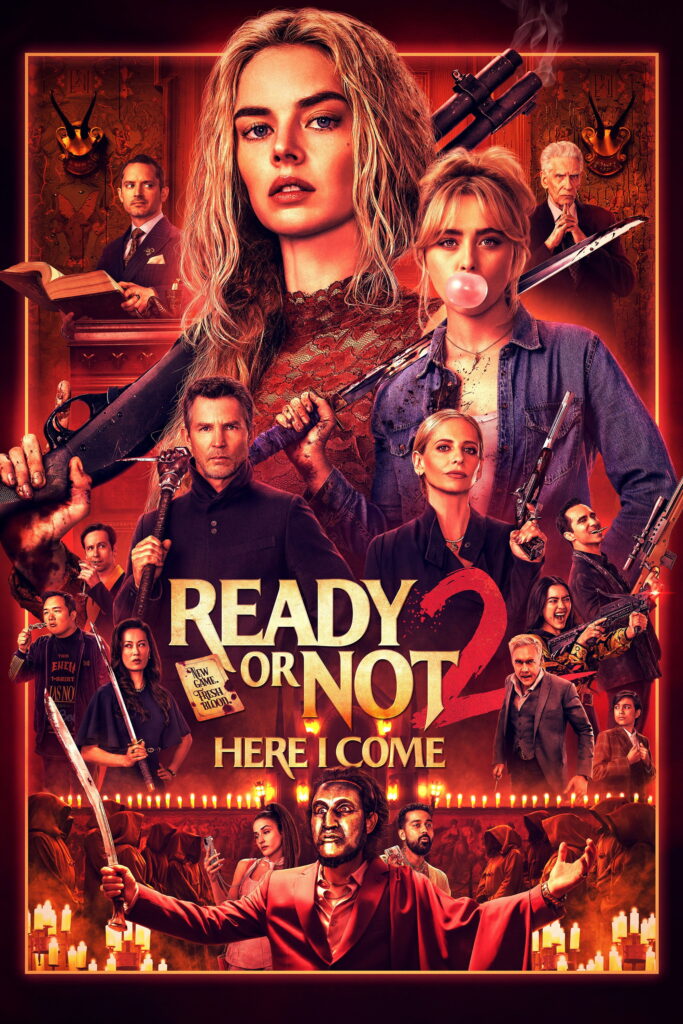
Moments after surviving an all-out attack by the Le Domas family, Grace (Samara Weaving) stumbles out of the mansion covered in blood and promptly collapses into the arms of the authorities. You’d think surviving a murderous family would earn her a quiet hospital stay and a nice cup of tea. Nope. Before long, she discovers she’s advanced to the next level of the nightmarish game, this time with her estranged sister Faith (Kathryn Newton) dragged into the festivities.
Apparently, killing one obscenely wealthy family isn’t enough. Now four rival families want Grace dead so they can claim the High Seat of the Council that controls the world. Because nothing says responsible global leadership quite like a bunch of privileged nutjobs murdering each other over a Satanic game.
Old man Chester Danforth (David Cronenberg) gets word of Grace’s survival, and the news spreads across the globe. His children, Ursula (Sarah Michelle Gellar) and Titus (Shawn Hatosy), have their own parts to play, while Elijah Wood pops up as the Lawyer, delivering some wonderfully deadpan expressions. Nothing like a little legal representation when your family business involves ritualistic murder.
The rules are explained thoroughly enough, and the families certainly seem committed to following them. So committed, in fact, that it doesn’t take long for the sisters to come under attack in the hospital. Holy explosions! I guess the fine print on this particular inheritance agreement is bloody important.
The basic setup is familiar. Survive until dawn while a bunch of rich weirdos try to kill you. Except there’s not a whole lot of hiding going on. It’s more like hunt the sisters, with Grace and Faith improvising their way through increasingly ridiculous encounters. One fight, accompanied by Bonnie Tyler’s Total Eclipse of the Heart, is an especially amusing combination of romantic power ballad and spectacular violence. If you enjoy watching people explode, congratulations, you’ve found your flick.
Weaving once again proves she can carry a movie, balancing the action and humor without turning Grace into an invincible killing machine. The sisters survive through a healthy combination of desperation, luck, and sheer bloody-mindedness. Newton makes a solid addition, while Gellar is always welcome at my lunch table.
It’s an unnecessary sequel, sure, but it’s also a thoroughly entertaining one. Same basic fun as the original, plenty of clever moments, and enough carnage to keep the family reunion interesting.